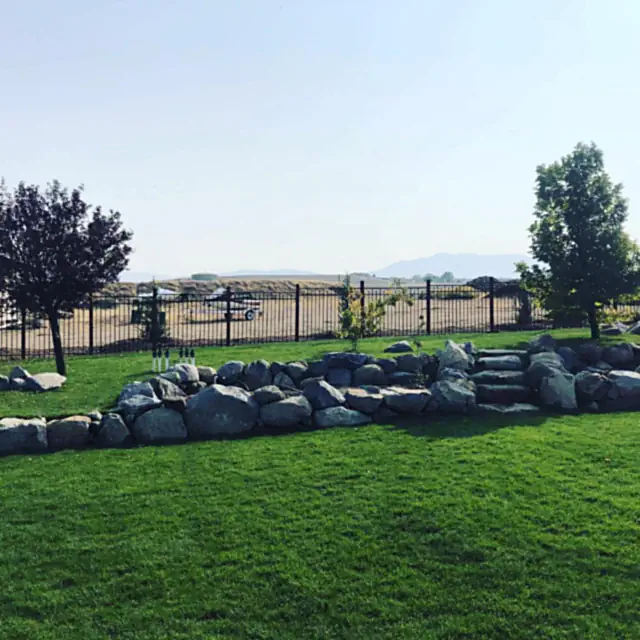
Custom retaining walls
A retaining wall is a structure, not decoration. Built right it holds a slope for decades. Built wrong it leans within two winters.
The work
What the job actually involves
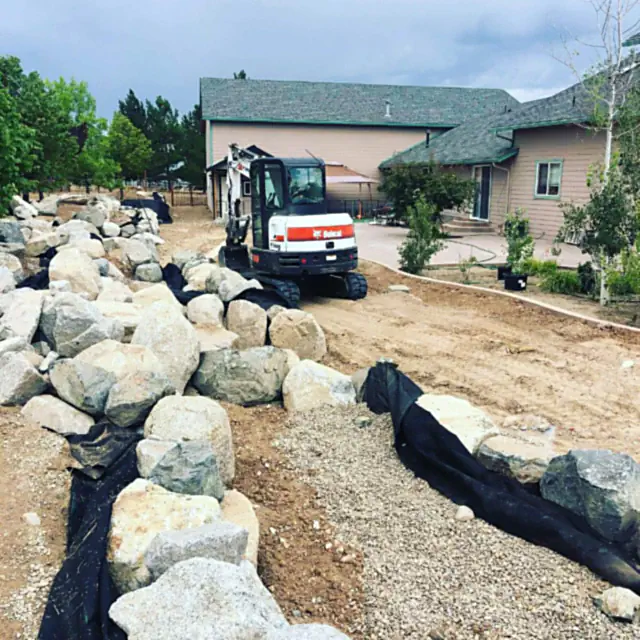
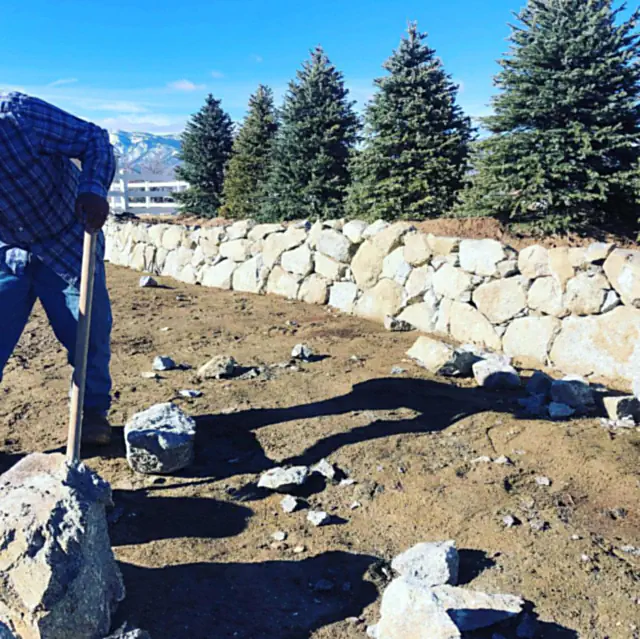
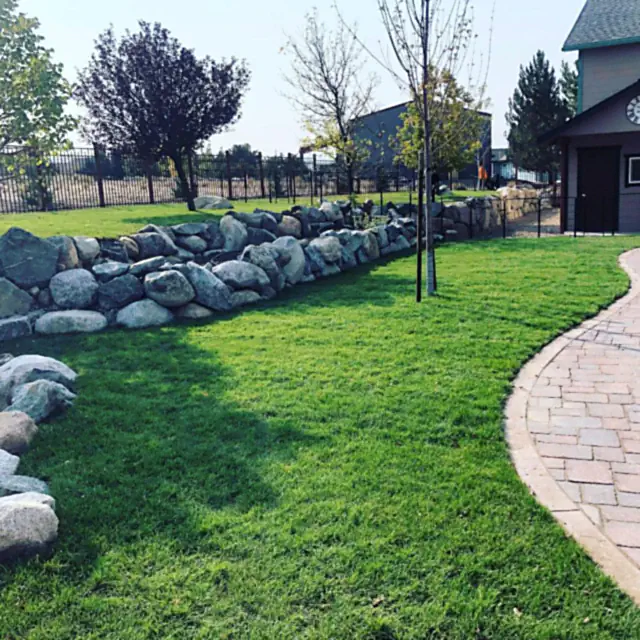
We build boulder walls from Nevada granite and engineered block walls where the site calls for a straighter line. Either way the work that matters happens before the first stone goes down: excavating back into competent soil, setting a compacted base, and building in drainage so water has somewhere to go.
Water is what kills walls here. Freeze-thaw cycles and spring runoff put enormous pressure behind a wall that has no drainage. Every wall we build gets backfilled with drain rock and a proper outlet.
The walls we get called out to inspect are almost never failing because the stone was wrong. They're failing because water had nowhere to go, or because the first course was set on soil that moves.
Above roughly 4 feet a wall starts needing engineering, and in many cases a permit. We'll tell you at the estimate if that's where your project sits rather than discovering it halfway through — and quite often the better answer is two shorter tiered walls instead of one tall one.
See more of our work-
Site & grade assessment
We read the slope, soil and water path before quoting anything.
-
Excavation & base prep
Dug back to solid material and compacted — the part that decides the lifespan.
-
Drainage built in
Drain rock, fabric and an outlet so hydrostatic pressure never builds.
-
Boulder or block
Natural granite for a landscape look, block where you need a clean line.
-
Tiered walls
Multiple shorter walls where one tall one would be wrong for the site.
-
Backfill & finish
Graded, topped and ready for planting, rock or turf.
How it runs
First call to finished
-
01
Read the site
Slope, soil, and crucially where water arrives from and where it can go. This determines the whole design.
-
02
Excavate and prep
Dug back well behind the wall line to make room for the drainage zone, then a compacted base on competent material.
-
03
Build and backfill together
Drain rock, fabric and outlet pipe go in as the courses go up. It cannot be added afterwards.
-
04
Finish the grade
Backfilled, graded and left ready for planting, rock or turf.
Straight pricing
What moves the number
We don't publish a price per square foot, because a number given without seeing the site is a guess that only ever moves upward. These are the things that genuinely change what this work costs — so when you compare quotes, you can see where they differ and why.
Get a written estimate- Wall height and length — height drives cost faster than length
- Boulder versus engineered block
- How much excavation the slope requires, and where the spoil goes
- Access for machinery — hand-building a wall is a very different job
- Whether tiering or engineering is needed
Recent projects
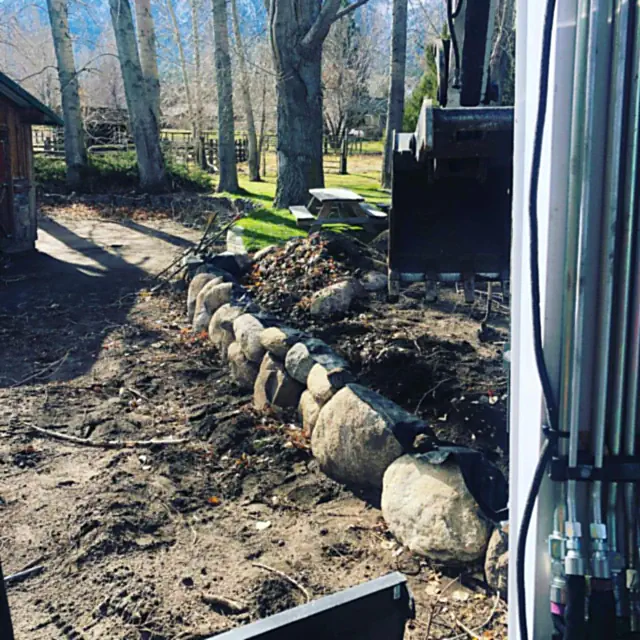
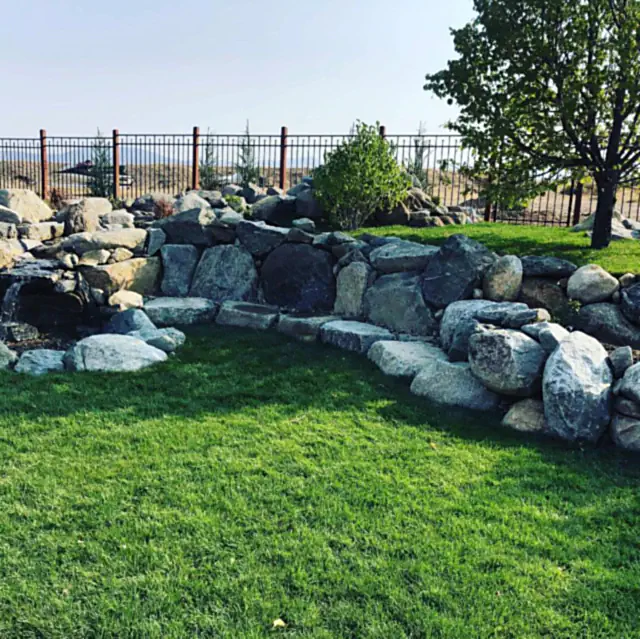
Retaining Walls in the Carson Valley
Before you call
Retaining Walls questions
How long will a wall last?
Built with proper base and drainage, decades. Built without drainage, it can start leaning within two or three winters — freeze-thaw does the work.
Do I need a permit?
Often above about 4 feet, and sometimes lower depending on what it's retaining. We check before quoting rather than after.
Boulder or block — which is better?
Neither is better, they suit different sites. Boulder looks like it belongs in this landscape; block gives you a straighter line and a tighter footprint. We'll say which we'd choose and why.
Can you fix a wall that's already leaning?
Sometimes the top courses can be reset. If it's leaning because there's no drainage, the honest answer is usually a rebuild — you can't retrofit drainage from the front.
Can you build on a steep slope?
Yes, that's most of what we do in places like Genoa. Steep ground usually wants tiered walls rather than one tall one.
Related services
Free estimate
Let's get your yard sorted
Walk-through and written estimate at no charge, anywhere in the Carson Valley and about 40 miles out.
Licensed & insured · NV Lic. NV20161011432