Mulching & rock beds
Mulch is not decoration. In a high desert it is how you keep water in the ground and weeds out of it.
The work
What the job actually involves
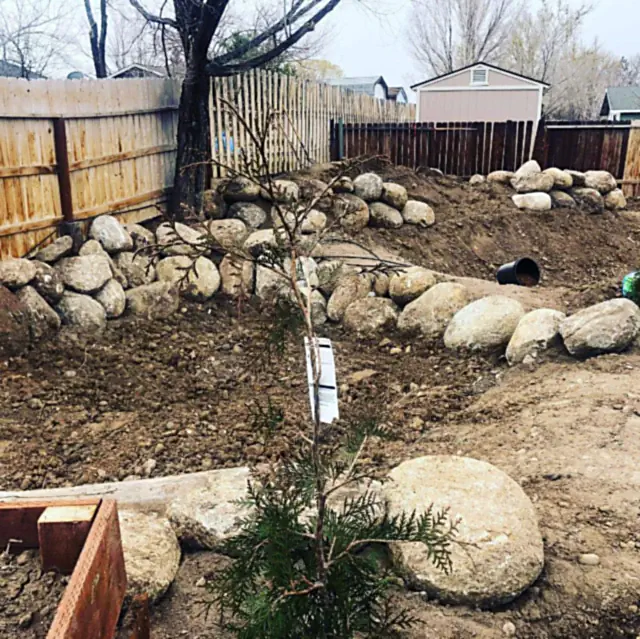
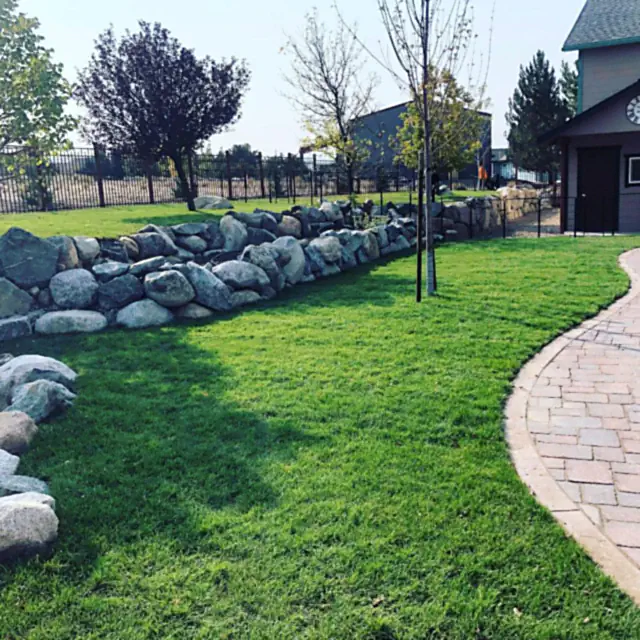
Bark holds moisture and feeds the soil as it breaks down. Decorative rock lasts effectively forever and suits our climate — cobble, crushed granite or river rock depending on the look. Both go over quality fabric with clean edges so the bed holds its shape.
We'll also strip out old, matted bark and failed fabric before laying new. Putting fresh material over a bed that's already full of weed root just buys you a season.
Mulch does three jobs at once: it holds moisture in the soil, it stops weed seed germinating, and it moderates soil temperature. In a high desert with single-digit humidity, the first one alone justifies it.
The mistake we correct most often is fresh material laid straight over old, matted bark and failed fabric. That buys one season and makes the bed harder to fix later.
See more of our work-
Bed prep
Existing weeds and spent material removed first.
-
Weed fabric
Commercial-grade fabric, overlapped and pinned properly.
-
Bark mulch
Holds moisture and improves soil as it breaks down.
-
Decorative rock
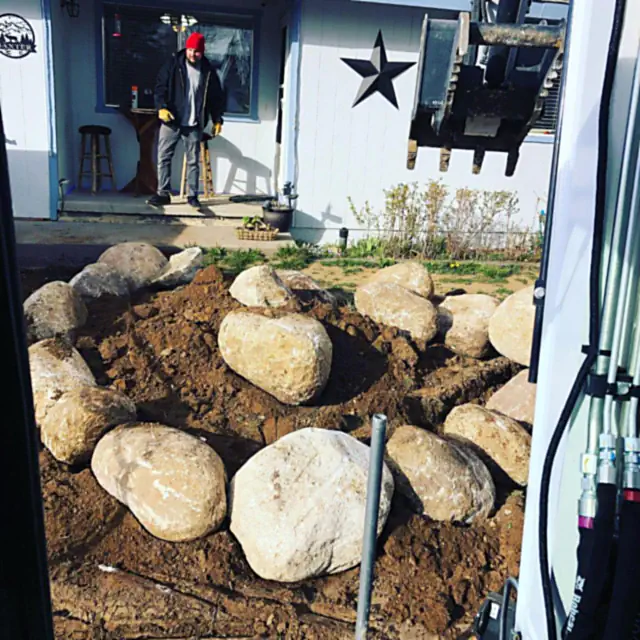
Cobble, crushed granite or river rock, machine-placed.
-
Edging
Clean bed lines that hold instead of migrating into the lawn.
-
Refresh
Topping up beds that have thinned or faded.
How it runs
First call to finished
-
01
Strip what's failed
Old matted bark, torn fabric and any weeds that have rooted through come out first.
-
02
Edge the beds
Clean bed lines cut in, so the material stays where it's put instead of migrating into the lawn.
-
03
Fabric where it earns its place
Commercial-grade, overlapped and pinned — under rock. In planted beds a thick mulch without fabric often ages better.
-
04
Place and finish
Bark or rock at an even depth, pulled back from trunks and stems.
Straight pricing
What moves the number
We don't publish a price per square foot, because a number given without seeing the site is a guess that only ever moves upward. These are the things that genuinely change what this work costs — so when you compare quotes, you can see where they differ and why.
Get a written estimate- Bed area and depth of material
- Bark versus decorative rock — rock costs more up front and lasts far longer
- Whether old material has to be removed and hauled
- Edging, if bed lines need cutting or restraint installed
- Access for wheelbarrowing material to the beds
Recent projects
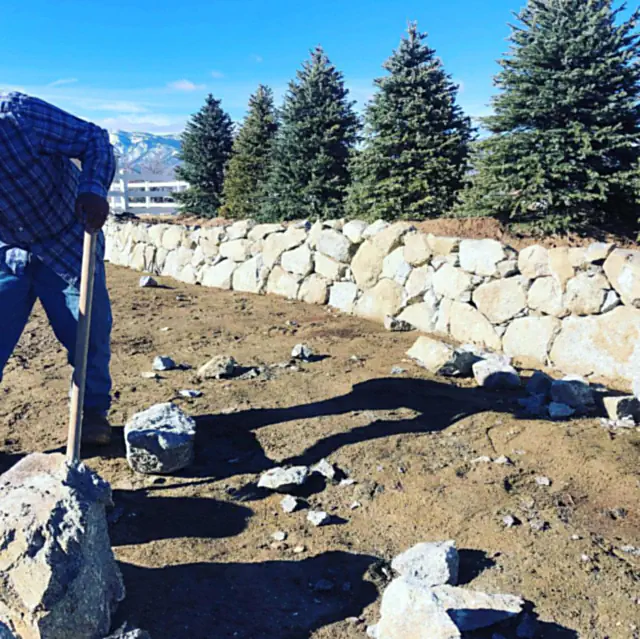
Mulching in the Carson Valley
Before you call
Mulching questions
Bark or rock?
Bark improves the soil as it breaks down but needs topping up every couple of years. Rock is effectively permanent and suits our climate, but it doesn't feed the soil. Plenty of properties use both, in different places.
How deep should mulch be?
Two to three inches. Deeper starts holding too much moisture against stems; shallower doesn't suppress weeds.
Should mulch touch the trunk?
No — and this is the single most common mistake we see. Bark piled against a trunk rots bark and houses voles. It goes in a flat ring, pulled back a few inches.
Does landscape fabric work?
Under rock, for a good while. In planted beds it has a shelf life — fines build up on top, weeds germinate in that layer, and the fabric then makes them harder to pull.
How often does bark need replacing?
Topping up every year or two, depending on how exposed the bed is. Wind moves it here more than most places.
Related services
Free estimate
Let's get your yard sorted
Walk-through and written estimate at no charge, anywhere in the Carson Valley and about 40 miles out.
Licensed & insured · NV Lic. NV20161011432